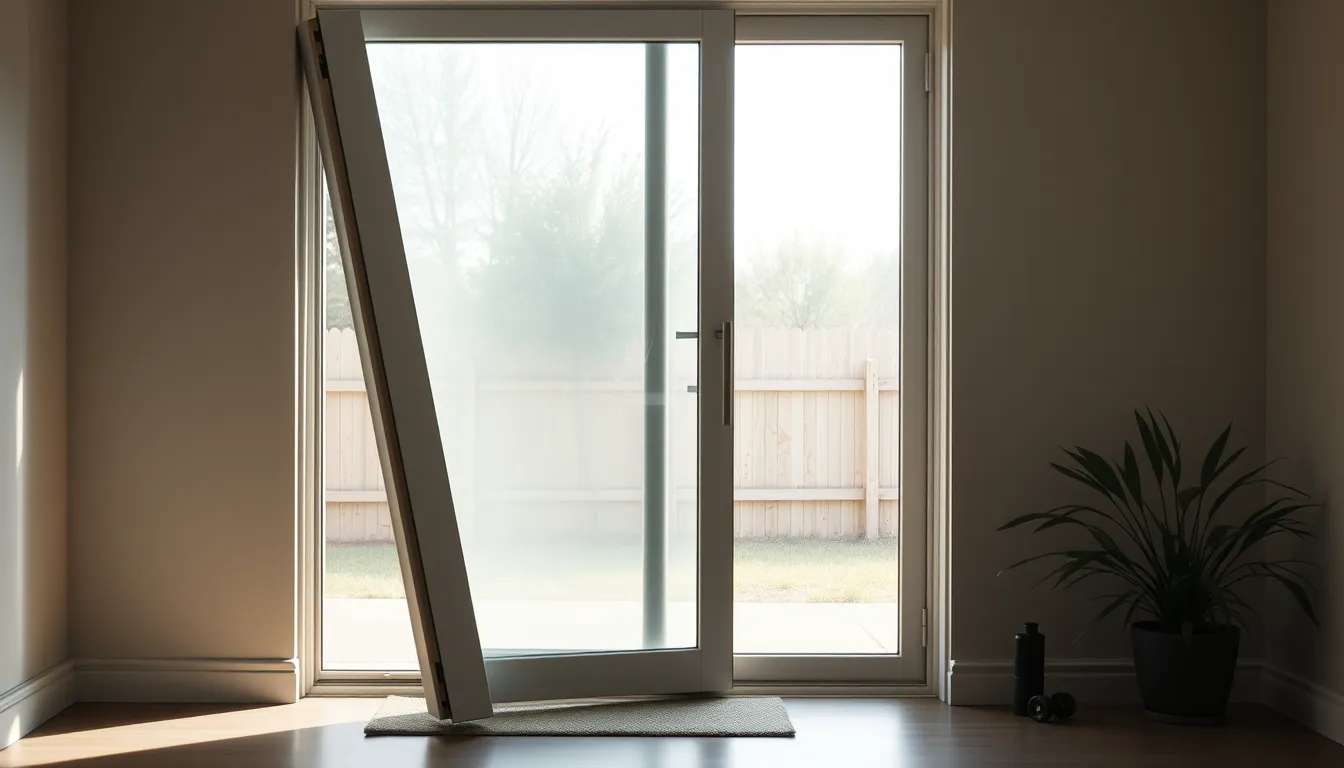
A sliding patio door is the largest moving object in most houses and the one that gets used most casually. It is pushed with a hip, dragged with a handful of frame, and left half open for the dog. Over fifteen or twenty years that treatment finds every weak component in the assembly, and the door starts to announce its problems: a thump as it rolls, a drag near the latch, a lock that will not catch unless you lift the handle.
Almost all of that is fixable without replacing the door. The frame and the glass are the expensive, durable parts. What wears out is the small hardware at the bottom of the panel and the track it runs on.
The four things that actually fail
Rollers. Each panel has two or four rollers in the bottom rail, carrying the weight of the glass. The wheel is usually nylon or steel with a thin tyre, and a flat spot develops where the door has sat in the same open position for years. That flat spot is why the door thumps once per revolution instead of gliding. Rollers are replaceable and the replacement also lets us set the panel height correctly.
Tracks. The bottom track is an aluminium extrusion with a raised rib the rollers run on. Grit collects in it, and the rib wears down in the middle where the traffic is heaviest. A track that has worn into a groove is either replaced with a new track laid over the old or, more often, cleaned and fitted with a stainless cap. A track that is simply dirty is surprising how often it explains a door that 'suddenly' stopped working.
Locks and keepers. The hook or latch engages a keeper on the fixed panel. It only works when the sliding panel sits in the right plane. Wear in the rollers drops the panel a few millimetres and the hook misses. Adjusting the rollers usually restores the lock; the lock itself is replaced far less often than people assume.
Weep holes and sill. The track has drain slots that let water out. When they block, the track fills in a storm and overflows inside. Clearing them and checking that the exterior sill falls away from the wall solves most storm leaks. It is a five minute job that homeowners rarely think to do.
Re-glazing rather than replacing
A broken patio door panel is alarming but rarely a reason to replace the door. The panel lifts out, the glazing stops are removed, the broken tempered glass comes out and a new tempered unit is set back in. Tempered glass for doors is required by code, is heat treated, and cannot be cut down on site — it is ordered to the exact size. The frame, rollers and track are reused, which is why the repair is a fraction of a new door.
On a double pane patio door the same logic applies with the sealed unit ordered to size, which also solves a fogged panel at the same time as a broken one.
When a door is genuinely finished
We recommend replacement when the frame itself has failed — a bottom rail rotted through on a wood door, a vinyl frame that has cracked at the corner, or a header that has sagged so the opening is no longer square. Those are structural, and new hardware will not hold a panel in an opening that has moved.
The other honest case is an old single pane aluminium door in a wall that is being re-done anyway. At that point the marginal cost of a new unit against the surrounding work is small, and repairing hardware on a door that is about to be removed is money wasted.
Sliding door questions
My sliding door drags and jumps the track. Is that the rollers?
Usually, yes. Each panel rides on two or four rollers set into the bottom rail, and those rollers have a tyre or a bearing that flattens with age and weight. A flat spot makes the panel thump as it rolls over that point rather than glide. The fix is to lift the panel out, take the old rollers out of the bottom rail, fit new ones and set the height so the panel clears the track by a couple of millimetres. If the panel has been dragging for a long time the track itself may be worn in a groove, which is a separate repair.
The glass is fine but the door will not lock. What is wrong?
The lock is a hook or a latch that engages a keeper on the fixed panel, and it only works when the sliding panel sits in exactly the right place. If the door has dropped on worn rollers, or the track has shifted, the panel sits a few millimetres low and the hook misses the keeper. Adjusting the roller height often restores the lock without touching the lock itself. If the hook is bent or the keeper has pulled out of the frame, that is a hardware replacement.
Can a sliding door be re-glazed if the glass is broken?
Yes, and it is usually worth doing rather than replacing the whole door. The panel comes out, the glazing stops come off, the broken glass is removed and a new tempered unit is set back in. Tempered glass is required in doors by code and cannot be cut on site, so it is ordered to size. The frame, the rollers and the tracks are usually reusable, which is why the repair costs a fraction of a new door.
Water is coming in at the bottom during storms. Is the door failing?
Most often it is the weep system rather than the door. A sliding door has a track with weep holes that let water that gets past the panel drain out to the exterior. Those holes block with dirt and debris, and once they are blocked the track fills and overflows into the room. Clearing them and checking the exterior sill slopes away from the wall fixes the majority of storm leaks. If water is still getting in after that, the flashing under the door is the next suspect and that is a bigger job.
The screen door is bent and will not slide. Can it be straightened?
Sometimes. A slight bend in an aluminium screen door frame can be worked back, and worn rollers replaced, which restores it. A frame that has been bent sharply, usually by someone leaning on it, tends to kink at the corner and will not sit flat again. At that point re-screening the frame is pointless and the screen door is replaced. We will tell you which situation you are in once we see it.
Get the door rolling again
Call (442) 287-1412 and tell us whether it drags, thumps, will not lock, leaks, or all four. Most patio door repairs are a single visit with the parts in the van.